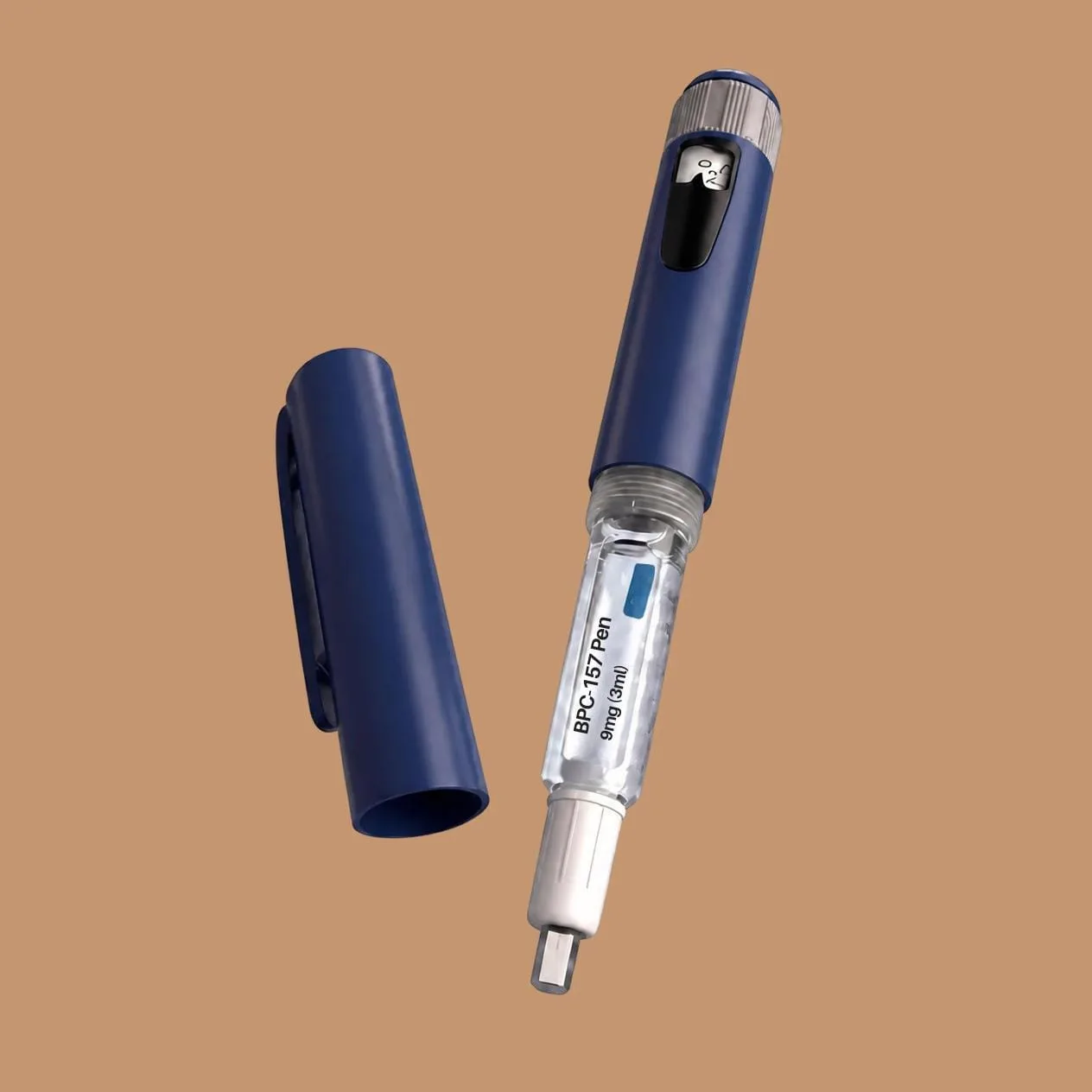
BPC-157 is a synthetic peptide that researchers have studied for its possible role in cellular signaling, gastrointestinal biology, and tissue repair. It contains 15 amino acids and is often described in scientific literature as a gastric pentadecapeptide. Most research comes from animal models and laboratory experiments, with very limited human clinical evidence.
A pen presentation introduces a different delivery format, but it does not change the evidence available for the peptide itself. Research on BPC-157 does not establish the safety, absorption, or effectiveness of a specific pen formulation. There is also no established human dosing regimen or validated pharmaceutical formulation for BPC-157.
The BPC-157 Pen 9 mg product should therefore be described through its peptide identity, research background, formulation details, and safety limitations. The product label should confirm its total peptide content, concentration, delivery mechanism, and other formulation specifications.
Overview of the Product
| Characteristic | Details |
|---|---|
| Product name | BPC-157 Pen |
| Labeled peptide amount | 9 mg |
| Active ingredient | BPC-157 |
| Peptide classification | Synthetic 15-amino-acid peptide |
| Amino acid sequence | GEPPPGKPADDAGLV |
| Dosage form | Pen presentation |
| Research areas | Gastrointestinal biology, cellular signaling, and tissue remodeling |
| Evidence base | Primarily preclinical research |
| Human clinical evidence | Limited evidence |
| FDA approval | Not approved by the FDA |
Product specification note: The 9 mg label indicates the stated total peptide amount. It does not establish the concentration, amount delivered per actuation, number of actuations, or duration of use. Confirm these details from the manufacturer's technical documentation.
Mechanism of Action
BPC-157 is a pentadecapeptide, meaning it contains 15 amino acids. Its reported sequence is GEPPPGKPADDAGLV. Researchers have examined several biological pathways that may explain its activity in experimental models.
Actin regulation and cellular movement
Actin is a structural protein that helps cells maintain their shape and move. Experimental studies have investigated possible effects of BPC-157 on actin-related processes and cellular migration. These processes play roles in tissue remodeling and cellular repair.
Angiogenesis and vascular signaling
Angiogenesis refers to the formation of new blood vessels. Preclinical studies have examined BPC-157's possible influence on vascular signaling and blood vessel formation. However, these findings do not establish improved circulation or tissue recovery in humans.
Gastrointestinal biology
Researchers have also studied BPC-157 in experimental models of gastrointestinal injury. Some animal studies have reported protective effects in different parts of the digestive system. These findings provide research context but do not establish benefits for human gastrointestinal conditions.
Clinical Research
Musculoskeletal research
A 2025 systematic review examined 36 studies on BPC-157 in orthopedic and sports medicine research. Most studies involved animal models of muscle, tendon, ligament, and bone injuries. The review identified very limited human evidence and highlighted the need for stronger clinical trials.
Human clinical evidence
A 2024 pilot study examined BPC-157 injections in 12 women with interstitial cystitis. Participants reported symptom improvements after treatment. However, the study lacked a control group and used a specific bladder-directed injection procedure. Its findings cannot establish the effectiveness of a BPC-157 pen.
A separate 2025 pilot study examined intravenous BPC-157 in two participants. The researchers reported no significant changes in the measured biomarkers or adverse effects during the short observation period. A study with only two participants cannot establish general or long-term safety.
Formulation and pharmacokinetic research
A 2026 review discussed important gaps in BPC-157 development. These included limited pharmacokinetic information, formulation challenges, and the absence of validated pharmaceutical preparations. The review also highlighted the need for better human studies.
Overall evidence assessment: BPC-157 remains an investigational peptide. Current research does not establish that a 9 mg pen improves tissue repair, reduces inflammation, or treats any medical condition. Evidence from other administration routes cannot confirm the safety or effectiveness of this specific pen formulation.
Safety and Regulatory Considerations
BPC-157 has important safety limitations that require careful attention. These concerns apply to the peptide and its formulation, including products presented in pen devices.
- Limited human safety data: Available human studies involve very small participant groups. They cannot establish long-term safety or identify uncommon adverse effects.
- Immunogenicity concerns: FDA has identified potential immune-response risks associated with BPC-157 products. Peptide aggregation and impurities may contribute to these concerns.
- Formulation quality: Peptide identity, purity, concentration, and stability require suitable analytical testing. FDA's 2026 briefing materials also discussed gaps in impurity and microbial testing information for submitted BPC-157 material.
- Pen delivery specifications: The 9 mg total amount does not establish the amount delivered per actuation. Device performance, concentration, and product compatibility require manufacturer verification.
- FDA regulatory status: BPC-157 is not an FDA-approved drug. Its removal from an earlier FDA compounding category following withdrawn nominations did not constitute approval. FDA subsequently reviewed BPC-157-related substances at its July 2026 Pharmacy Compounding Advisory Committee meeting.
The available evidence does not establish that BPC-157 pens are safe or effective for human treatment. This description is educational and does not establish suitability for human use.