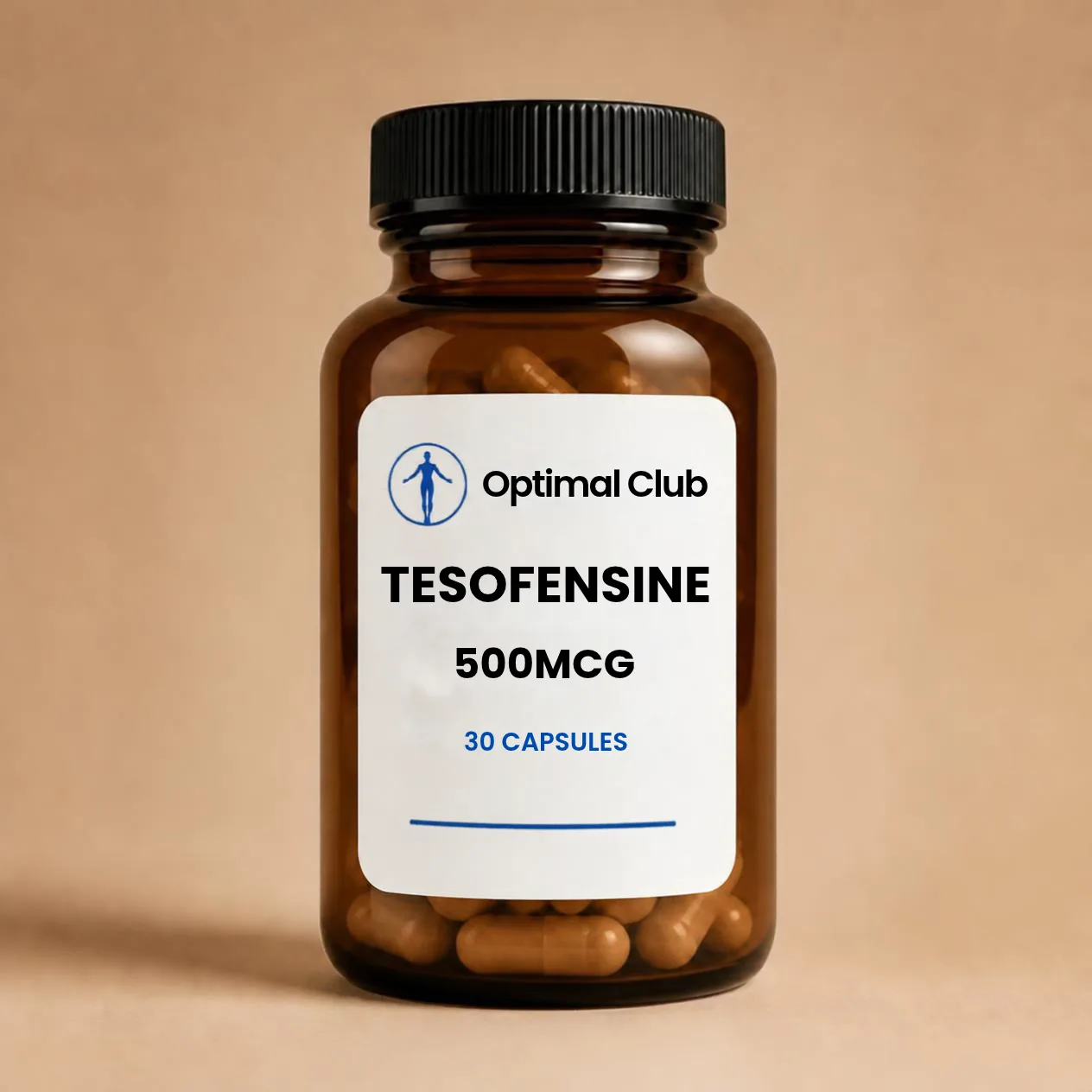
What Is Tesofensine 500mcg?
Tesofensine is an investigational compound studied for its potential role in appetite regulation, body weight reduction, and obesity management. Originally developed for neurological research, tesofensine later attracted attention because researchers observed changes in appetite and body weight during clinical investigations.
Tesofensine belongs to a class of compounds known as triple monoamine reuptake inhibitors. It influences three important neurotransmitters in the brain: serotonin, norepinephrine, and dopamine.
These chemical messengers are involved in appetite, motivation, mood, and energy regulation.
The 500mcg strength corresponds to 0.5mg, a dose investigated in clinical trials. However, this does not mean that 500mcg is an established safe or effective dose for routine weight management.
At Optimal Club, understanding the science behind investigational weight management compounds is an important part of our educational approach to metabolic health.
Regulatory status: Tesofensine is not FDA-approved for weight loss or any other medical condition. Its long-term safety and effectiveness remain under investigation.
How Does Tesofensine Work?
Tesofensine works by inhibiting the reuptake of three neurotransmitters in the central nervous system.
Normally, after nerve cells release neurotransmitters, specialized transporters remove them from the space between nerve cells.
Tesofensine interferes with this reuptake process, increasing the availability of certain neurotransmitters.
1. Serotonin and Appetite Regulation
Serotonin participates in brain pathways associated with appetite and satiety.
By influencing serotonin signaling, tesofensine may affect feelings of fullness and food intake.
However, researchers are still investigating how much each neurotransmitter contributes to its overall effects.
2. Norepinephrine and Energy Regulation
Norepinephrine is involved in alertness, sympathetic nervous system activity, and energy regulation.
Tesofensine's effects on norepinephrine signaling may contribute to appetite-related changes.
The same mechanism also raises safety concerns, particularly regarding heart rate and cardiovascular function.
3. Dopamine and Food-Related Motivation
Dopamine plays a role in reward processing, motivation, and behavior.
Researchers have investigated whether changes in dopamine signaling contribute to reduced food-seeking behavior and altered appetite.
Together, these three mechanisms make tesofensine different from medications that primarily target GLP-1 receptors.
Scientific reference: Tesofensine, a Monoamine Reuptake Inhibitor for the Treatment of Obesity – PubMed
Tesofensine 500mcg and Weight Loss: What Does Clinical Research Show?
One of the most frequently cited studies of tesofensine was published in The Lancet in 2008.
The randomized, double-blind, placebo-controlled Phase II trial included 203 adults with obesity.
Participants followed an energy-restricted diet and received either placebo or one of three investigated tesofensine doses over 24 weeks.
Results From the Clinical Trial
The investigators reported the following mean weight reductions beyond those achieved with diet and placebo:
Investigated dose | Additional mean weight loss |
|---|---|
Tesofensine 0.25mg | 4.5% |
Tesofensine 0.5mg (500mcg) | 9.2% |
Tesofensine 1.0mg | 10.6% |
These results suggested that tesofensine could influence body weight in controlled clinical settings.
However, the results should be interpreted with caution.
In 2013, The Lancet published an expression of concern regarding the original study, involving questions about trial procedures and adverse-event reporting at certain study centers.
Therefore, the reported effectiveness figures should not be interpreted as established clinical outcomes or promises of individual weight reduction.
Research references:
Potential Benefits Being Investigated
Tesofensine has attracted scientific interest because of several possible effects on appetite and body weight.
Appetite Suppression
Clinical research suggests that tesofensine can reduce appetite through its effects on central nervous system neurotransmitter signaling.
This may lead to lower food intake under controlled study conditions.
Weight Reduction
Phase II research reported greater weight reduction among tesofensine-treated participants than among participants receiving placebo.
These findings require careful interpretation and additional confirmation.
Changes in Body Fat
Researchers have investigated whether tesofensine-associated weight reduction includes changes in body fat and waist circumference.
Some studies reported reductions in these measurements, although the long-term clinical significance remains uncertain.
Food Intake and Satiety
Tesofensine may influence brain signaling associated with hunger, fullness, and food-related motivation.
These mechanisms remain areas of ongoing pharmacological research.
Metabolic Health Research
Because excess body weight can influence several metabolic processes, investigators have explored potential relationships between tesofensine-associated weight reduction and metabolic health.
However, tesofensine is not an established treatment for diabetes, cardiovascular disease, or other metabolic conditions.
Important: These are investigational effects, not FDA-approved therapeutic benefits.
Tesofensine 500mcg: Potential Side Effects and Safety Concerns
Although tesofensine has demonstrated pharmacological activity in clinical research, its safety profile requires careful evaluation.
Reported adverse effects include:
Dry mouth
Nausea
Constipation
Diarrhea
Insomnia
Abdominal discomfort
Increased heart rate
Changes in blood pressure
Mood-related symptoms
Sleep disturbances
Cardiovascular Considerations
Cardiovascular safety is particularly important because tesofensine affects norepinephrine signaling.
In the 2008 Phase II study, the 0.5mg group experienced an average heart rate increase of approximately 7.4 beats per minute compared with placebo.
Although the trial did not find a statistically significant blood pressure increase at that dose, other research has raised cardiovascular safety concerns.
These findings are especially relevant to individuals with hypertension, arrhythmias, or other cardiovascular conditions.
Mental Health and Sleep Considerations
Because tesofensine changes neurotransmitter activity, researchers have also examined potential effects on sleep, mood, and behavior.
Possible concerns include insomnia, restlessness, anxiety, and mood changes.
Interactions with other medications affecting serotonin, dopamine, or norepinephrine may create additional risks.
Long-Term Safety
The long-term safety of tesofensine has not been established sufficiently for routine clinical use.
Further research is necessary to understand its cardiovascular, neurological, and metabolic effects over extended periods.
Scientific reference: Long-Term Efficacy and Safety of Anti-Obesity Treatment – PubMed Central
How Is Tesofensine Different From GLP-1 Medications?
Tesofensine and GLP-1 receptor agonists are investigated or used in weight management through different biological mechanisms.
Feature | Tesofensine | GLP-1 receptor agonists |
|---|---|---|
Primary mechanism | Inhibits serotonin, norepinephrine, and dopamine reuptake | Activates GLP-1 receptors |
Main research focus | Appetite signaling and weight reduction | Glucose regulation, appetite, and weight management |
Drug class | Triple monoamine reuptake inhibitor | Incretin-based medication |
FDA approval for weight management | Not approved | Certain medications approved |
Key safety considerations | Cardiovascular and neurological effects | Gastrointestinal and other medication-specific risks |
Both approaches involve pathways associated with hunger and food intake, but they are not interchangeable.
Unlike tesofensine, certain GLP-1-based medications have undergone extensive Phase III trials and received FDA approval for specific indications.
Individuals exploring weight management should discuss established treatment options and their risks with qualified healthcare professionals.
Is Tesofensine 500mcg FDA-Approved?
No. Tesofensine is not FDA-approved for weight management or any other medical indication.
The FDA has granted orphan drug designation to a combination of tesofensine and metoprolol for investigation in hypothalamic obesity, but orphan designation is not marketing approval.
This distinction is important because investigational compounds may show promising clinical results without having sufficient evidence to support routine prescribing or commercial distribution.
Medical supervision alone does not make an unapproved drug an authorized treatment.
Regulatory reference: FDA Orphan Drug Designation Record – Tesofensine Plus Metoprolol
Understanding Tesofensine Research at Optimal Club
At Optimal Club, we emphasize evidence-based education, transparent risk information, and informed conversations about weight management.
Tesofensine remains an investigational compound, and its clinical findings should be considered alongside its regulatory status and unresolved safety questions.
Individuals seeking medical weight management should undergo an appropriate clinical assessment and discuss FDA-approved treatment options with qualified healthcare professionals.
Scientific research is valuable for understanding emerging treatments, but early clinical findings should never be treated as guarantees of safety or effectiveness.
Frequently Asked Questions About Tesofensine 500mcg
What is tesofensine 500mcg?
Tesofensine 500mcg refers to 0.5mg of an investigational compound that inhibits the reuptake of serotonin, norepinephrine, and dopamine. It has been studied for its potential effects on appetite and body weight.
Does tesofensine help with weight loss?
Clinical trials have reported weight reduction among participants receiving tesofensine. However, important limitations in the evidence and unresolved safety concerns mean its effectiveness for routine clinical use has not been established.
How does tesofensine suppress appetite?
Tesofensine influences neurotransmitter signaling in the brain, including pathways involved in hunger, satiety, and food-related behavior.
Is tesofensine a peptide?
No. Tesofensine is a synthetic small-molecule compound, not a peptide. It belongs to the triple monoamine reuptake inhibitor class.
Is tesofensine the same as semaglutide?
No. Tesofensine acts primarily through neurotransmitter reuptake inhibition, whereas semaglutide activates GLP-1 receptors. They have different mechanisms, safety considerations, and regulatory statuses.
What are the side effects of tesofensine?
Reported side effects include dry mouth, nausea, constipation, insomnia, increased heart rate, and other cardiovascular or neurological concerns.
Is tesofensine safe for long-term use?
Long-term safety has not been adequately established. More clinical evidence is needed before routine medical use can be supported.
Can tesofensine be combined with other weight loss medications?
The safety of combining tesofensine with other weight loss medications has not been adequately established. Such combinations may create additional cardiovascular, neurological, or drug-interaction risks.
Conclusion
Tesofensine 500mcg is an investigational compound that has attracted scientific attention for its effects on neurotransmitter signaling, appetite regulation, and weight reduction.
Clinical trials have reported changes in body weight and related measurements, but important questions remain about study reliability, cardiovascular safety, long-term outcomes, and regulatory approval.
At Optimal Club, we encourage informed decisions based on credible clinical research, transparent safety information, and appropriate professional medical evaluation.
Medical Disclaimer: This content is for educational purposes only. Tesofensine is not FDA-approved, and its safety and effectiveness for weight management have not been established. Nothing in this article constitutes a recommendation to obtain, prescribe, or use tesofensine.
Scientific References
Astrup A, et al. (2008). Effect of tesofensine on bodyweight loss, body composition, and quality of life in obese patients: a randomised, double-blind, placebo-controlled trial. The Lancet, 372(9653), 1906–1913. PubMed
The Lancet Editors (2013). Expression of concern—Effect of tesofensine on bodyweight loss, body composition, and quality of life in obese patients. The Lancet, 381(9873), 1167. PubMed
Astrup A, et al. (2013). Under-reporting of adverse effects of tesofensine. The Lancet, 382(9887), 127. PubMed
Tesofensine, a Monoamine Reuptake Inhibitor for the Treatment of Obesity. (2009). PubMed
Long-Term Efficacy and Safety of Anti-Obesity Treatment: Where Do We Stand? (2021). PubMed Central
U.S. Food and Drug Administration. Tesofensine Plus Metoprolol: Orphan Drug Designation for Hypothalamic Obesity. FDA