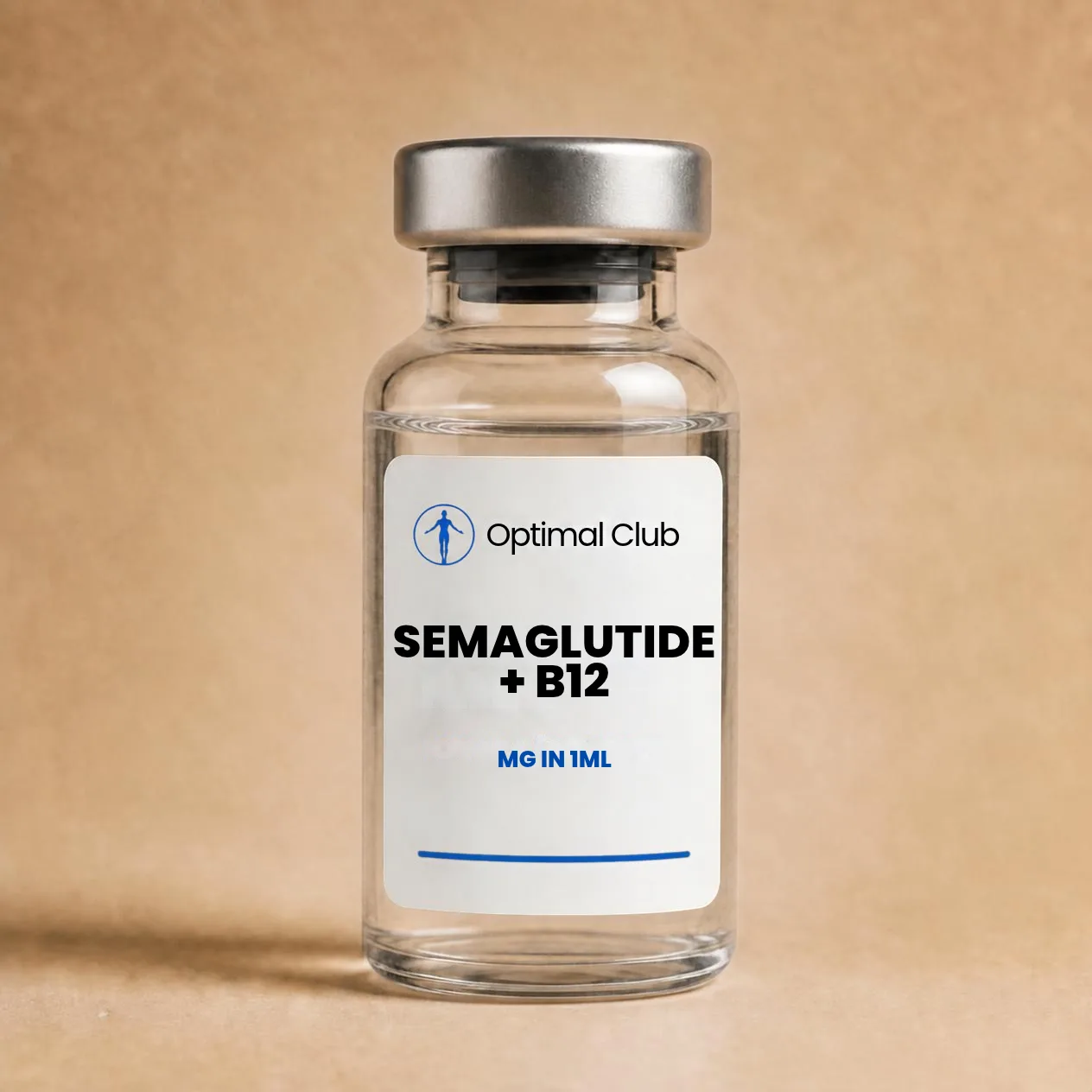
Semaglutide + B12 is a compounded formulation containing semaglutide and vitamin B12 (cobalamin). Semaglutide is a glucagon-like peptide-1 (GLP-1) receptor agonist that affects pathways involved in blood glucose regulation, gastric emptying, and appetite. Vitamin B12 is an essential nutrient involved in red blood cell formation, DNA synthesis, and normal nervous system function.
Compounded semaglutide + B12 is not an FDA-approved drug product. The FDA has stated that the safety and effectiveness of combining semaglutide with additional ingredients such as vitamin B12 have not been established.
What Is Semaglutide + B12?
Semaglutide is a GLP-1 receptor agonist. FDA-approved semaglutide products include Wegovy, Ozempic, and Rybelsus, each with specific approved indications and formulations. These approvals apply to those specific products and should not be used to describe a compounded semaglutide + B12 formulation.
Vitamin B12, also known as cobalamin, is a water-soluble vitamin required for normal red blood cell formation, DNA synthesis, and nervous system function.
The addition of B12 does not mean that the compounded combination has the same FDA-approved status as an FDA-approved semaglutide product.
How Does Semaglutide Work?
Semaglutide activates GLP-1 receptors. GLP-1 receptor activation can influence insulin secretion, glucagon secretion, gastric emptying, and appetite regulation.
Clinical research has evaluated semaglutide in people with overweight or obesity. In the STEP 1 trial, participants receiving once-weekly semaglutide 2.4 mg alongside lifestyle intervention experienced greater average weight reduction than participants receiving placebo. Gastrointestinal effects, including nausea and diarrhea, were among the most common adverse events.
These results apply to the semaglutide regimen studied in the clinical trial and should not be presented as expected or guaranteed results for an individual patient.
What Is the Role of Vitamin B12?
Vitamin B12 supports several essential physiological processes. According to the NIH Office of Dietary Supplements, B12 is required for:
- Normal red blood cell formation
- DNA synthesis
- Normal central nervous system function
- Myelination and neurological development
However, the presence of vitamin B12 in a compounded semaglutide formulation should not be described as proven to improve weight loss, increase energy, enhance semaglutide's effects, or reduce semaglutide-related adverse effects.
The FDA specifically states that the safety and effectiveness of combining semaglutide with additional ingredients such as vitamin B12 have not been established.
What Does the Research Say?
Research supporting semaglutide's clinical effects comes primarily from studies of semaglutide itself and from FDA-approved semaglutide products.
For example, the STEP 1 randomized clinical trial included 1,961 adults with overweight or obesity. After 68 weeks, the semaglutide group had a greater mean reduction in body weight than the placebo group. Nausea and diarrhea were among the most frequently reported adverse events.
However, these findings should not be interpreted as evidence that adding vitamin B12 produces additional weight-loss benefits. Evidence specifically establishing the safety or effectiveness of compounded semaglutide + B12 remains limited. The FDA has highlighted this distinction.
Is Semaglutide + B12 FDA Approved?
No. Compounded semaglutide + B12 is not an FDA-approved drug product.
The FDA states that compounded drugs are not FDA-approved and are not reviewed by the agency before marketing for safety, effectiveness, or quality.
The FDA has also issued specific guidance concerning compounded semaglutide products. In April 2026, the agency explained that a compounded product containing semaglutide and vitamin B12 may be considered essentially a copy of a commercially available drug under certain circumstances, depending on factors such as route and strength.
A prescriber can determine and document that the compounded formulation contains a change producing a significant difference for an identified individual patient.
Safety and Side Effects
Semaglutide can cause gastrointestinal adverse effects. Clinical research has reported adverse events such as:
- Nausea
- Diarrhea
- Vomiting
- Constipation
- Abdominal discomfort
In the STEP 1 trial, gastrointestinal events were among the most common adverse events, and some participants discontinued treatment because of these effects.
Compounded semaglutide can also present additional considerations because compounded products are not subject to the FDA's premarket review for safety, effectiveness, and quality. The FDA has reported medication-error concerns involving compounded injectable semaglutide, including differences in concentrations and dosing instructions.
Vitamin B12 has established nutritional functions, but adding it to semaglutide does not eliminate the potential risks associated with semaglutide.
Why Is Clinical Evaluation Important?
Treatment decisions should be based on an individual's medical history, current medications, health status, and treatment needs.
A licensed healthcare provider can determine whether semaglutide treatment is medically appropriate and whether a compounded formulation containing additional ingredients is appropriate for a particular patient.
A prescription is provided only when a licensed clinician determines that treatment is appropriate.
Important Compounding Information
Compounded semaglutide + B12 is not an FDA-approved drug product. The FDA does not review compounded drugs for safety, effectiveness, or quality before marketing. The safety and effectiveness of combining semaglutide with vitamin B12 have not been established.